Delivery system
07/01/2026
What is the weight of a life in motion?
Not the physical mass but the emotional ballast...
the memories, the ghosts of landscapes, the fragile keepsakes that stand in for an entire history.
Delivery System, an exhibition of new work by Felipe Pineda, dissects this very question. It is a show about the architectures of movement and the archaeology of stasis; about the brutal poetry of the systems that move our world and the intimate, human freight they carry.
Pineda works like a geologist of the global. He takes the ephemera of transit / the shipping box, the lost-property form, the suitcase, and submits them to a process of petrification.
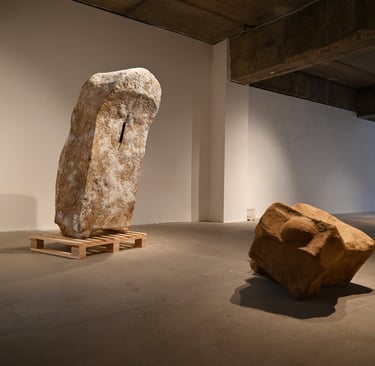
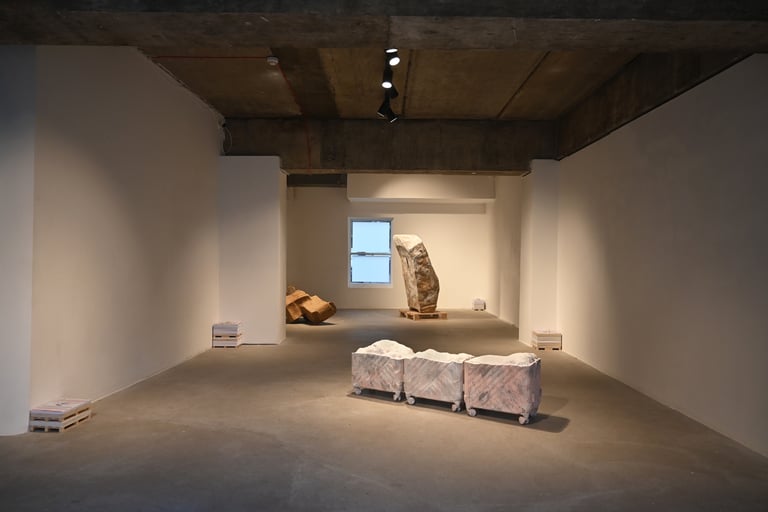
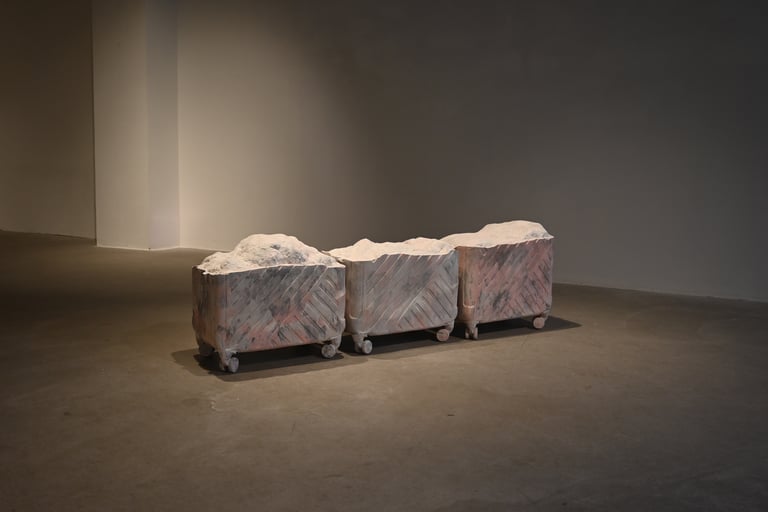
Large sculptures made from recycled international packaging, some with Jesmonite surfaces, stand not as representations.. They are geological cores drilled from the bedrock of our hyper-mobile present. They are objects of transits arrested, transformed into heavy, silent monuments. This is where the global infrastructure of logistics collides with the vulnerability of the personal trajectory. The routes of a parcel and the routes of a person are parallel but only one is ever truly tracked.
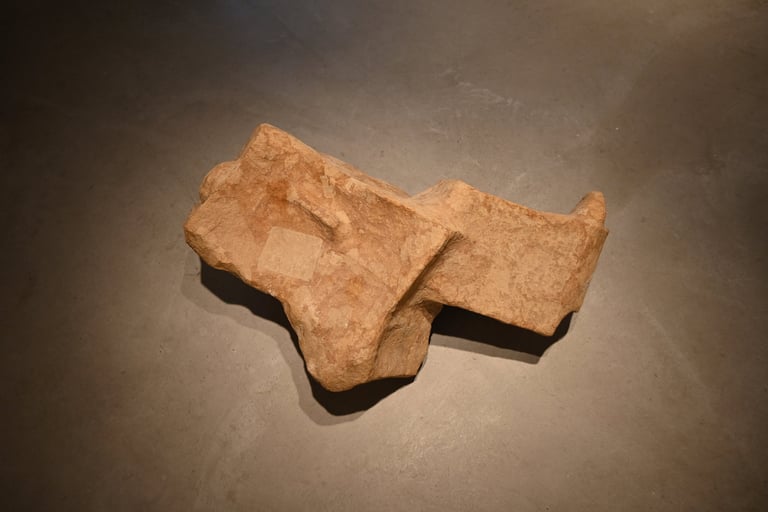
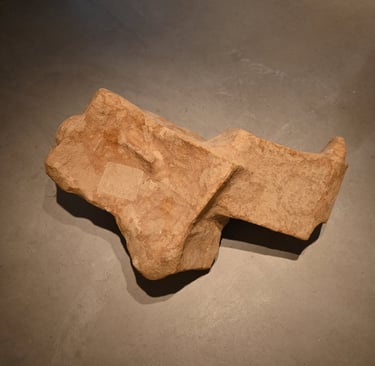
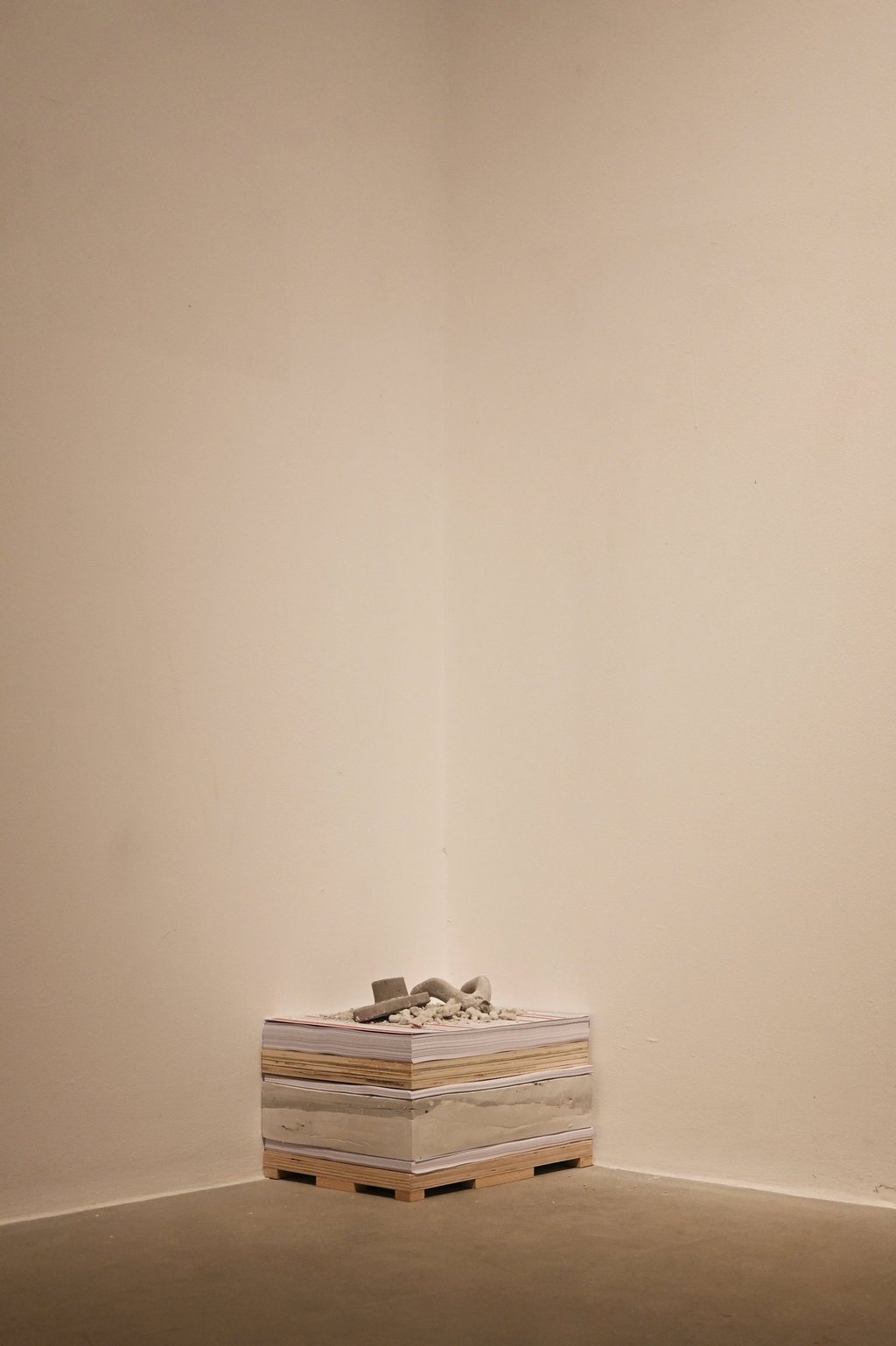
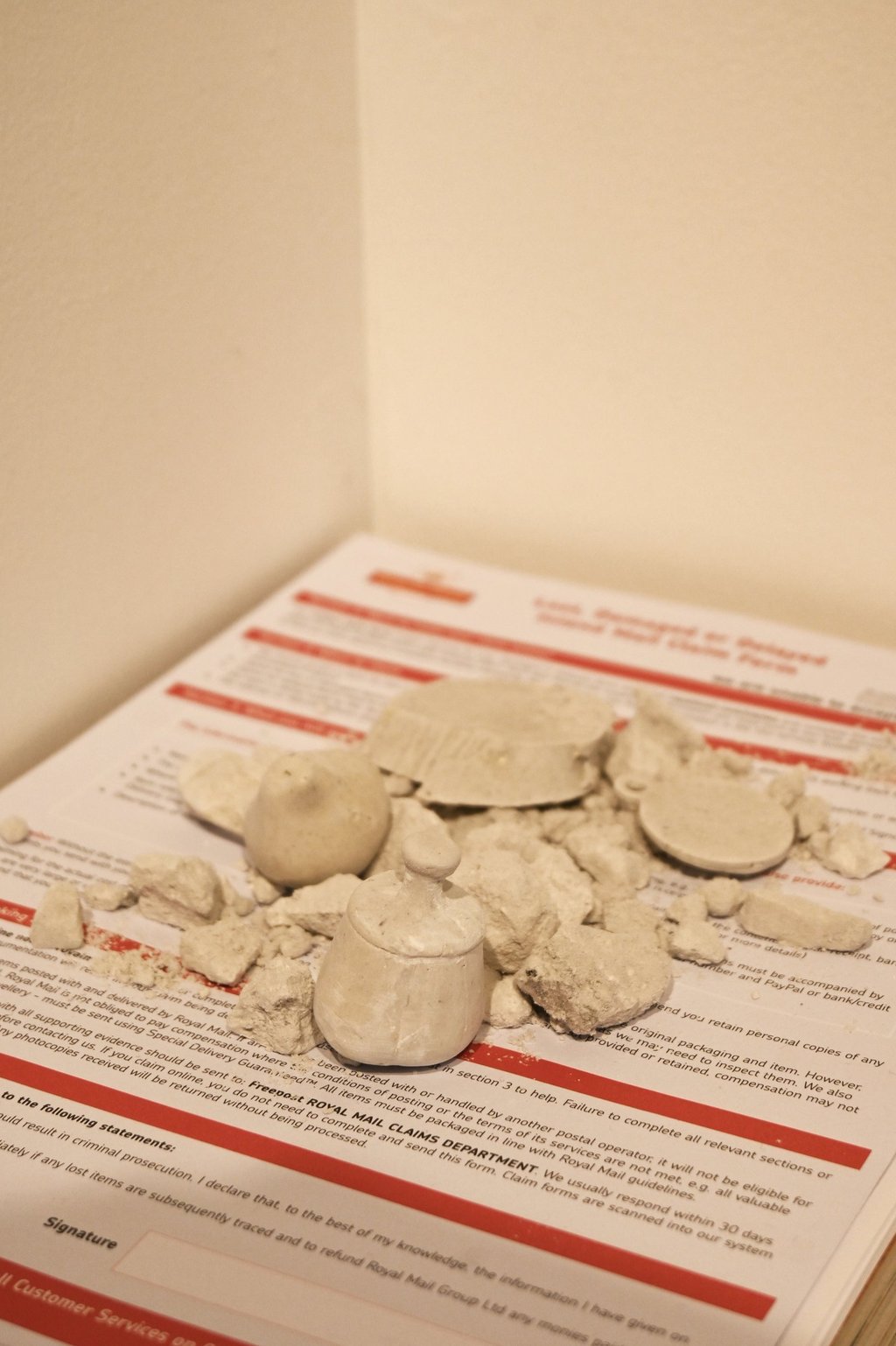
In Belongings, this correspondence deepens. Stratified layers of original Royal Mail forms each one a bureaucrat's confession of failure pile up on wooden pallets like sedimentary rock. On top of them, replicas of personal items from the artist’s close South American friends in London: souvenirs, talismans, gifts. They are presented as fragments... their forms are the way memory itself is eroded by distance and bureaucracy. The installation becomes a quiet, dispersed archive of what gets lost, what gets held onto and what becomes entangled in the cold mechanics of categorisation. The Mexican anthropologist Valeria Mata writes of "the emotional weight of the un-homed object" how a thing can become a dense node of belonging, a territory in itself when the original territory is lost. Pineda’s work is a physical manifestation of this theory.
The culmination of the exhibition, Heavy as a Mountain, makes this explicit. Casts from the artist's own migration suitcase cluster to form the silhouette of the Andes, the view from his window in Santiago. The landscape of origin is not left behind; it is reconstituted through the very vessel of its abandonment. The suitcase becomes a topographical memory. The mountain is carried, and in the carrying, it is remade.
Delivery System refuses the clean narrative of migration as a simple journey from A to B. Instead, Pineda maps a more honest, fractured reality: a condition of perpetual negotiation. He shows us that mobility is a system shaped not just by logistics and routes but by fragility, longing and the stubborn, persistent weight of what we call home.
Art Haxhijakupi.
Español//
¿Cuál es el peso de una vida en movimiento?
No la masa física, sino el lastre emocional...
los recuerdos, los fantasmas de los paisajes, los frágiles objetos guardados que sustituyen una historia entera.
Delivery System, una exposición de nuevas obras de Felipe Pineda, descompone esta misma pregunta. Es una muestra sobre las arquitecturas del movimiento y la arqueología de la inmovilidad; sobre la poética brutal de los sistemas que mueven nuestro mundo y la carga íntima y humana que transportan.
Pineda trabaja como un geólogo de lo global. Toma los ephemera del tránsito —la caja de envío, el formulario de objetos perdidos, la maleta— y los somete a un proceso de petrificación.
Grandes esculturas hechas con embalajes internacionales reciclados, algunas con superficies de Jesmonite, se alzan no como representaciones… Son núcleos geológicos extraídos del lecho rocoso de nuestro presente hipermóvil. Son objetos de tránsito detenidos, transformados en monumentos pesados y silenciosos. Aquí es donde la infraestructura global de la logística colisiona con la vulnerabilidad de la trayectoria personal. Las rutas de un paquete y las rutas de una persona son paralelas, pero solo una es realmente rastreada.
En Belongings, esta correspondencia se profundiza. Capas estratificadas de formularios originales de Royal Mail —cada uno una confesión burocrática del fracaso— se apilan sobre palés de madera como roca sedimentaria. Sobre ellos, réplicas de objetos personales de los amigos sudamericanos cercanos del artista en Londres: recuerdos, talismanes, regalos. Se presentan como fragmentos… sus formas son la manera en que la memoria misma es erosionada por la distancia y la burocracia. La instalación se convierte en un archivo silencioso y disperso de lo que se pierde, lo que se retiene y lo que queda enredado en la fría mecánica de la categorización.
La antropóloga mexicana Valeria Mata escribe sobre “el peso emocional del objeto sin hogar”: cómo una cosa puede convertirse en un nodo denso de pertenencia, un territorio en sí mismo cuando el territorio original se pierde. La obra de Pineda es una manifestación física de esta teoría.
El clímax de la exposición, Heavy as a Mountain, lo hace explícito. Moldes del propio maletín de migración del artista se agrupan formando la silueta de los Andes, la vista desde su ventana en Santiago. El paisaje de origen no se deja atrás; se reconstituye a través del mismo recipiente de su abandono. La maleta se convierte en una memoria topográfica. La montaña es transportada y, en el acto de transportarla, se rehace.
Delivery System rechaza la narrativa limpia de la migración como un simple trayecto de A a B. En su lugar, Pineda cartografía una realidad más honesta y fracturada: una condición de negociación perpetua. Nos muestra que la movilidad es un sistema moldeado no solo por la logística y las rutas, sino también por la fragilidad, el anhelo y el peso persistente y obstinado de lo que llamamos hogar.


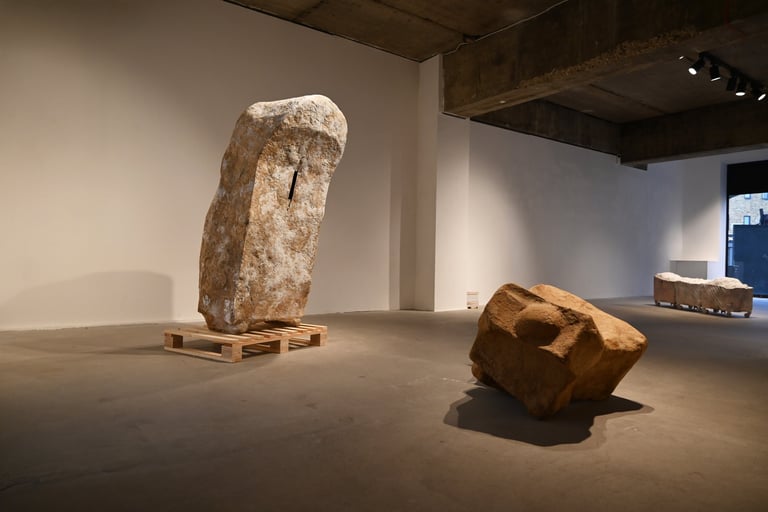


Heavy as the Andes, 2025, Jesmonite
Heavy as the andes, 2025
How to ship heavy loads, 2025, Recycled cardboard and jesmonite
Belongings, 2026, Jesmonite
How to ship heavy loads, 2025, Recycled cardboard and jesmonite
Heavy as the Andes, 2025, Jesmonite